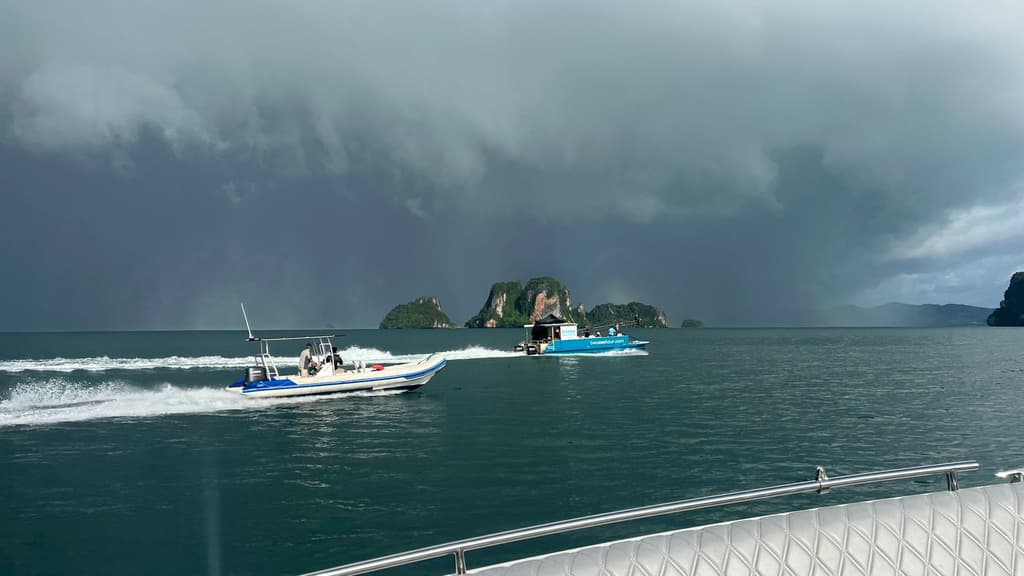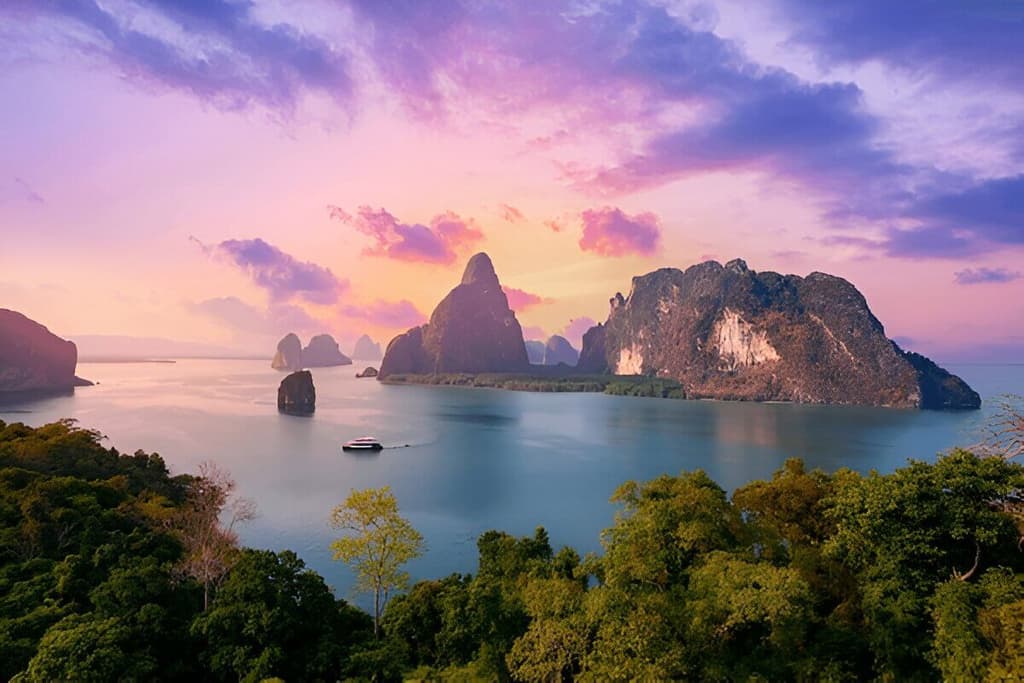


Phang Nga Bay is the vast bay of limestone karst islands just north-east of Phuket — home to James Bond Island, the stilted fishing village of Koh Panyee, and dozens of hidden hong lagoons and sea caves. From Phuket it is an easy speedboat day trip, and because the bay is so sheltered, it stays calm and runs reliably even through the green (monsoon) season.
Here's where Phang Nga Bay is, how to get there from Phuket, the famous bays you'll see, what there is to do, and the best time to go — from a team that runs into this bay every single day.
Where is Phang Nga Bay?
Phang Nga Bay sits in the Andaman Sea on Thailand's west coast, ringed by three towns: Phuket to the west, Krabi to the east, and Phang Nga to the north, which gives the bay its name. It covers around 400 square kilometres and contains some 42 islands. In 1981 the area was protected as Ao Phang Nga National Park, and in 2002 it was listed as a Ramsar wetland of international importance — it shelters one of the largest remaining native mangrove forests in South East Asia.
How to get to Phang Nga Bay from Phuket
This is the question we hear most, because so many Phuket visitors want to see the bay. The marinas that serve Phang Nga Bay are all on Phuket's east coast — the opposite side of the island from the main tourist beaches. Phuket is large (around 40 km north to south) and daytime traffic is heavy, so some departure points, like Ao Po or Yacht Haven, can be more than an hour's drive from Patong.
The trick is to choose a centrally located marina. Boat Lagoon Marina and the neighbouring Royal Phuket Marina are no more than about a 35-minute drive from anywhere in Phuket. We depart from Boat Lagoon Marina, and we leave early on purpose — among the first boats out — so you reach the key spots before they fill with the day-boat fleet. As a resident here for many years, running a company that operates into this bay every day, I can tell you the timing of your departure matters more than almost anything else about the trip; an early start is the difference between sharing James Bond Island with a handful of people and sharing it with a thousand.
Why Phang Nga Bay is so famous
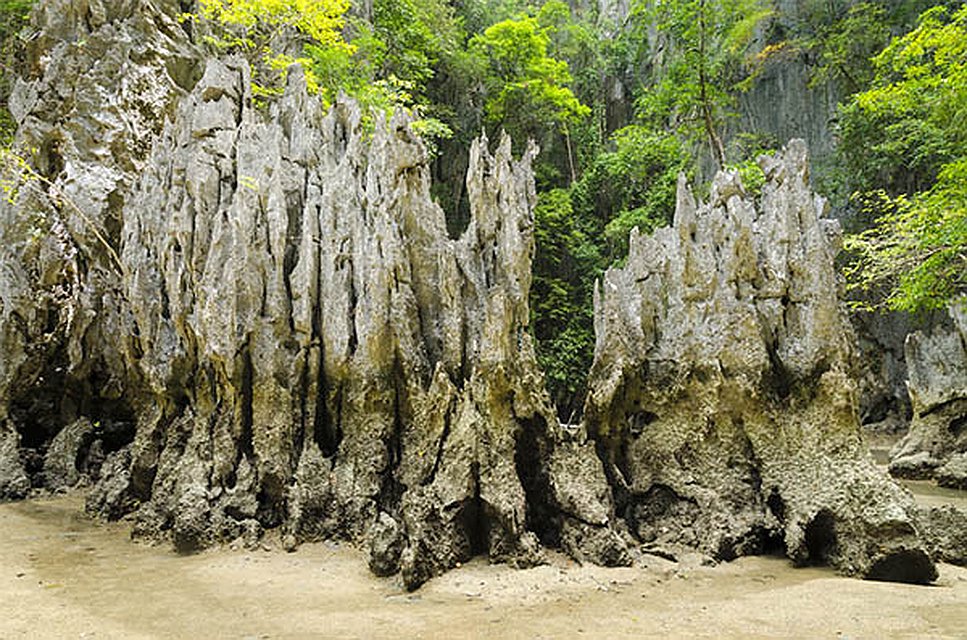
It is the spectacular limestone karst formations — sheer towers of rock rising straight out of the sea — that make Phang Nga Bay so unmistakable. They began forming hundreds of millions of years ago, pushed up as the earth's tectonic plates collided, then carved over time by the chemical weathering of slightly acidic rainwater into the cliffs, hidden caves, hongs, sinkholes and underground streams you see today. The same geology appears at Halong Bay in Vietnam and around Guilin in southern China — Phang Nga Bay is Thailand's chapter of that story.
The famous bays — and what to do
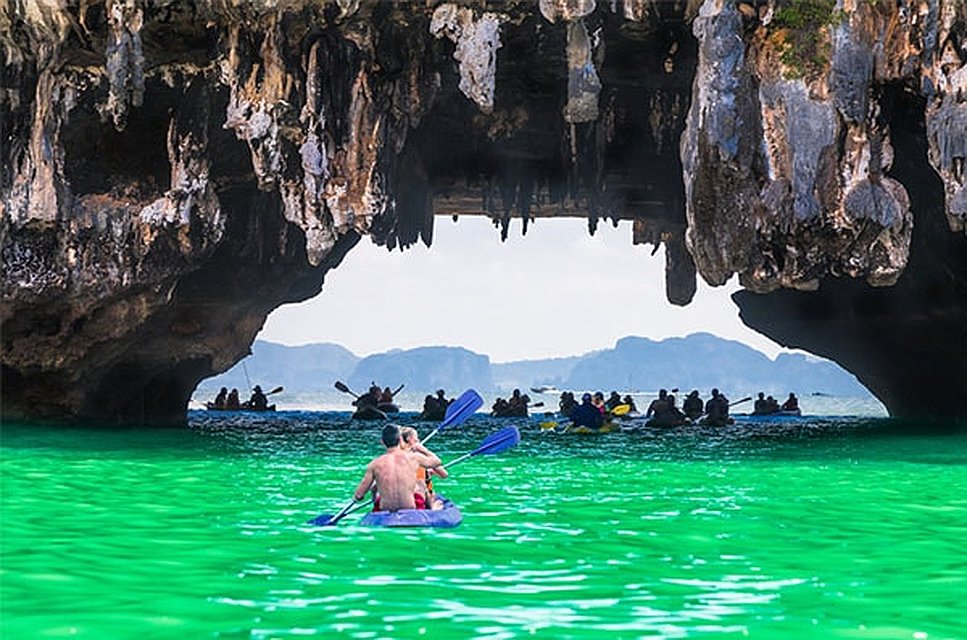
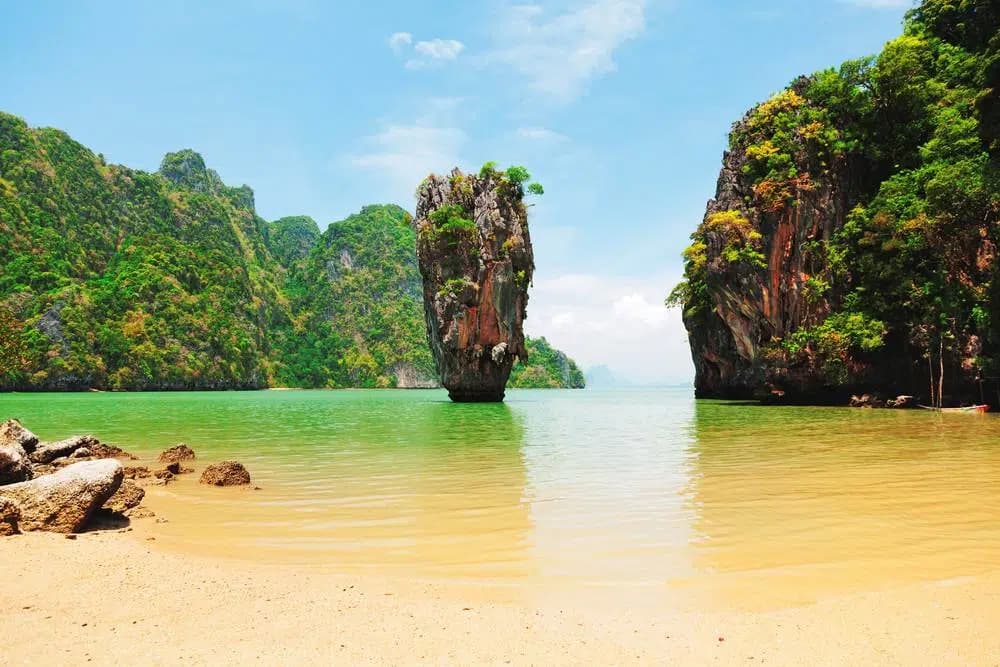
The headline stops are James Bond Island (Ko Tapu), Koh Panyee, and Hong Island. James Bond Island, made famous by The Man with the Golden Gun, shows off the bay's classic rock spire — get there as early as you can.
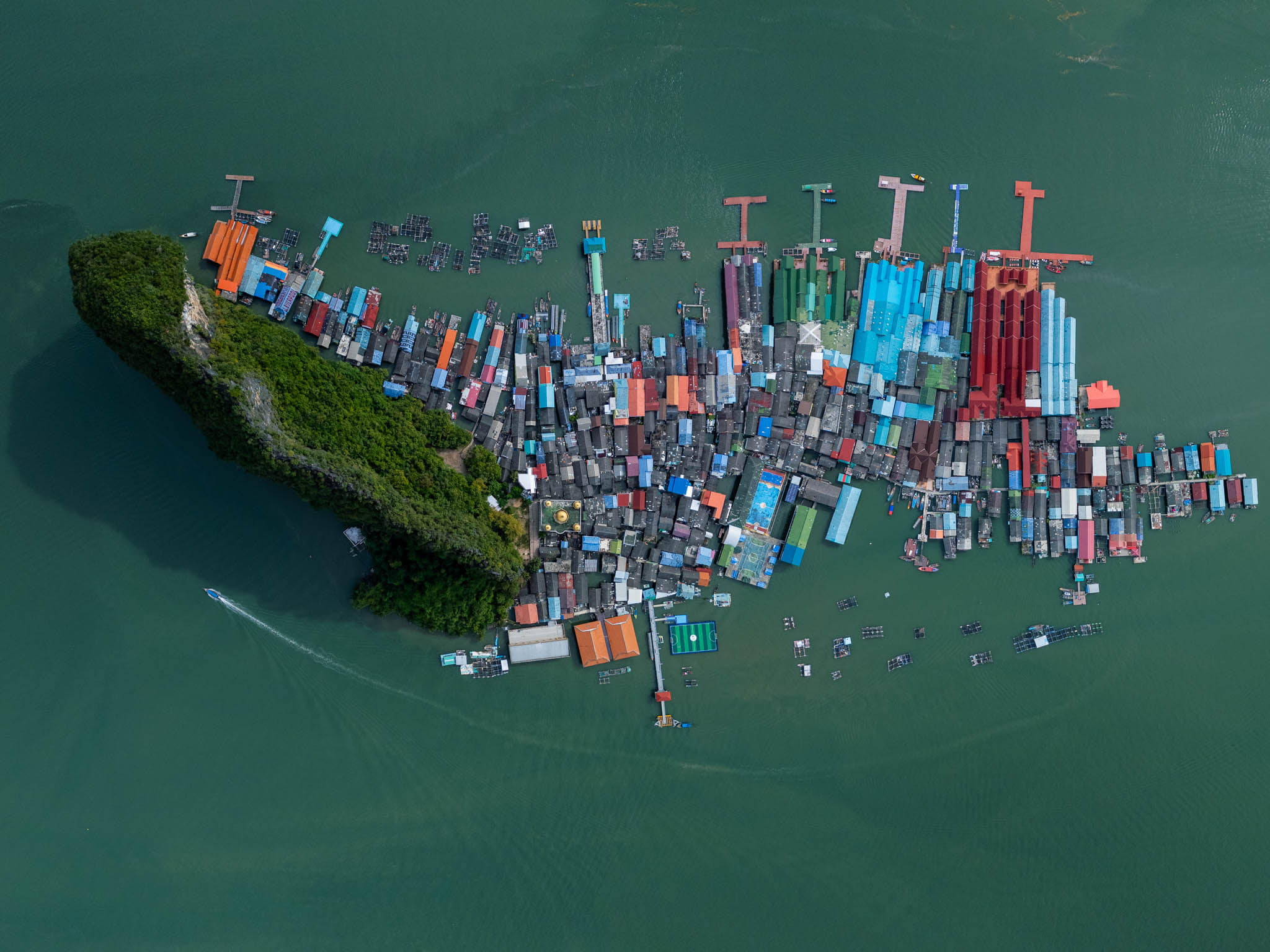
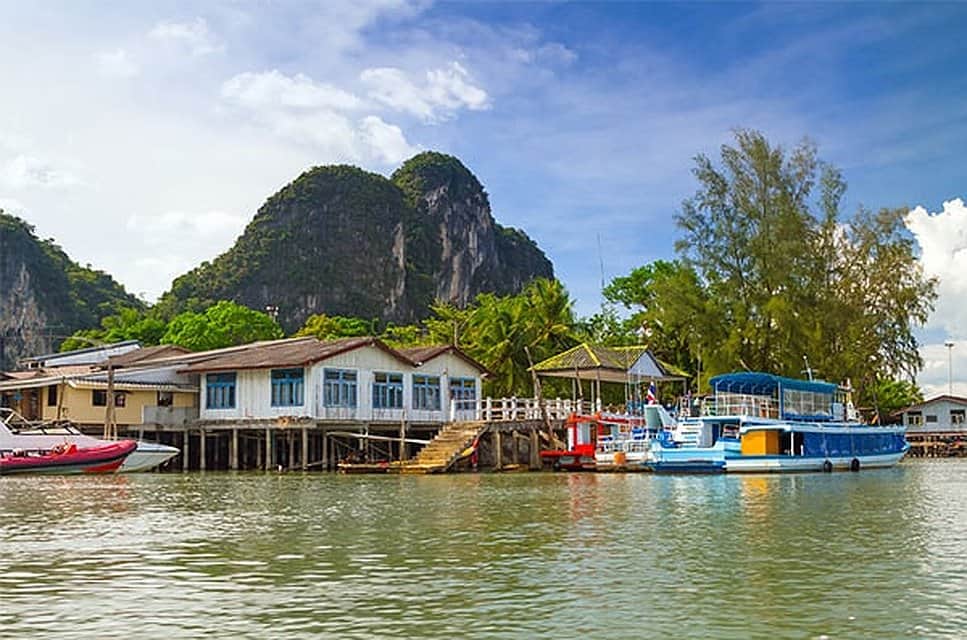
Koh Panyee is a fascinating fishing village built almost entirely on stilts beneath a towering limestone cliff, where our tour stops for a rustic Thai lunch. Hong Island is the go-to spot for kayaking, where local paddlers guide you in and out of caves and cathedral-like hongs. A day in the bay means secluded beaches, caves full of stalactites, and quiet lagoons — a sightseeing and kayaking experience rather than a snorkelling one.
When to go, including the green season
The dry season, November to April, brings the calmest seas and clearest skies. But Phang Nga Bay has a secret advantage: because it is so sheltered by its cliffs and shallow, protected water, it remains a smooth, safe trip even in the so-called rainy months. September in particular reveals a quieter, greener, more intimate side of the bay, with fewer crowds and lush, post-rain scenery. If you're visiting Phuket in the green season and worried about the weather, Phang Nga Bay is one of the most reliable days out you can book.
Wildlife in the bay
The bay's mangroves and jungle-covered islands are alive with wildlife. On a typical day you might spot some of the up to 88 recorded bird species — sea eagles, Brahminy kites, hornbills, kingfishers and more — along with monkeys and even mudskippers in the quieter hongs. Rarer residents include dugongs, the white-handed gibbon, and the black finless porpoise, with more than 80 species of fish recorded in these waters.
See Phang Nga Bay with people who run it daily
Phang Nga Bay rewards an early start and local knowledge. Our Phang Nga Bay tour from Boat Lagoon Marina is built around beating the crowds, and for a golden-hour version of the same scenery, our Phang Nga Bay sunset charter traces the bay at dusk. Discover the famous bays one by one — it is certainly not to be missed.