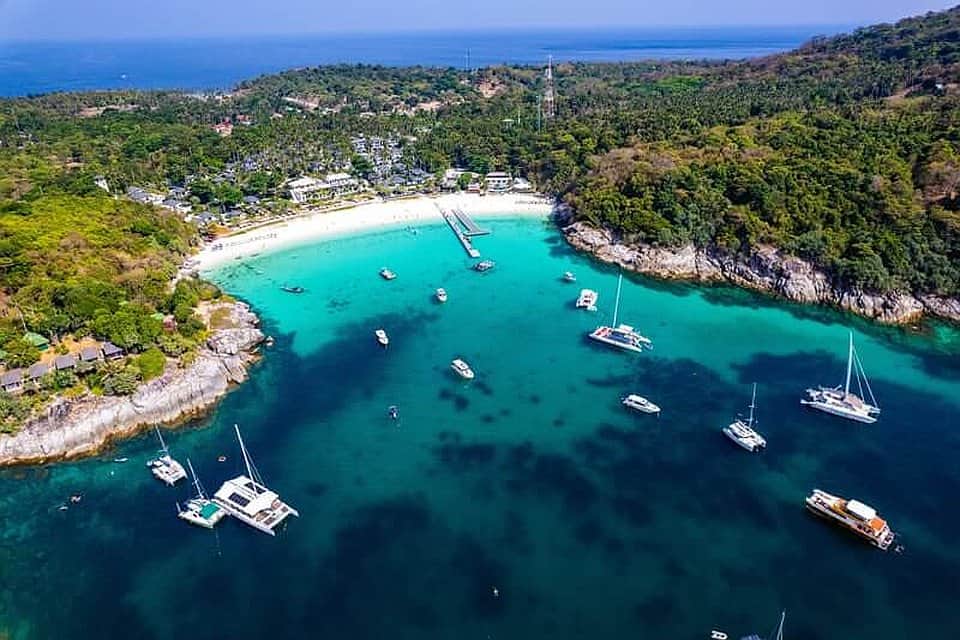


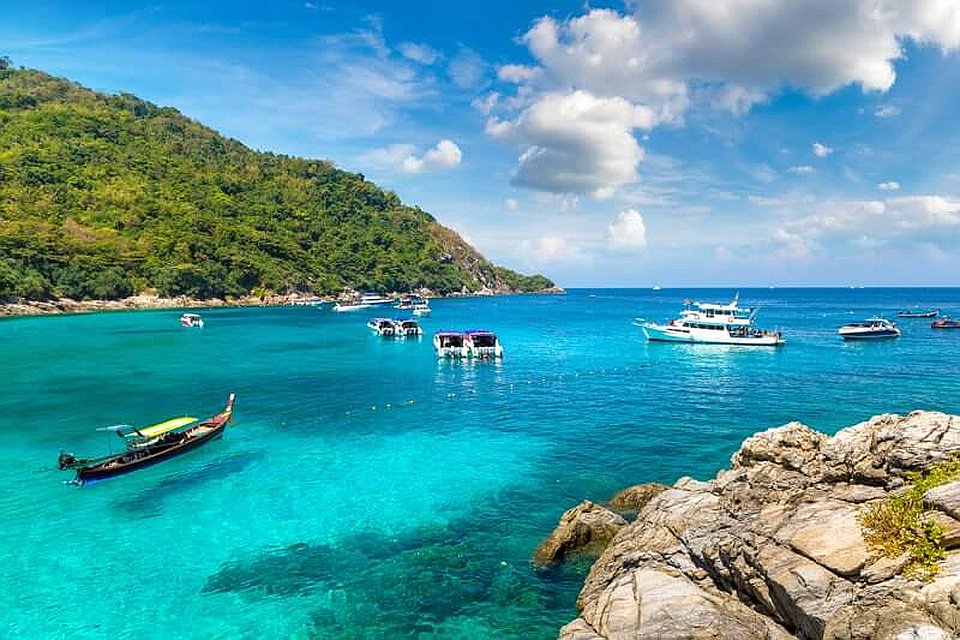
Koh Racha Yai (also spelled Raya Yai) is a small island about 20 km south of Phuket, prized for some of the clearest water anywhere near the island — which is why it’s a favourite for snorkelling and diving. You reach it by boat: roughly 45–60 minutes by speedboat from Phuket’s southern piers (Chalong or Rawai), longer on slower long-tail boats. Most trips land at Patok Beach (Ao Tawan Tok), a long, sheltered, U-shaped bay of fine white sand on the west coast, with Siam Bay next door. There are five beaches in all — the three quieter ones (Lha Bay, Ter Bay and Kon Kare Bay) sit on the east coast. The water is calm and shallow at the main bays, making Racha Yai genuinely good for families and first-time snorkellers, with livelier reefs a short hop away.
What sets Racha Yai apart, in our experience running these waters, is visibility. Our crews consistently rate it among the best snorkelling clarity within easy reach of Phuket — on a good day underwater visibility can reach 20–30 metres, and you can see straight down to the reef from the boat. The other thing worth knowing is that Racha “flips” with the season: from November to April the calm, snorkel-friendly side is the west (Patok and Siam Bays); from May to October the sheltered reefs are on the east coast at Kon Kare Bay. Operators who don’t adjust end up fighting the swell on the wrong side of the island. Reading that seasonal switch correctly is the difference between glassy water and a bumpy, cloudy snorkel.
Where is Koh Racha Yai?
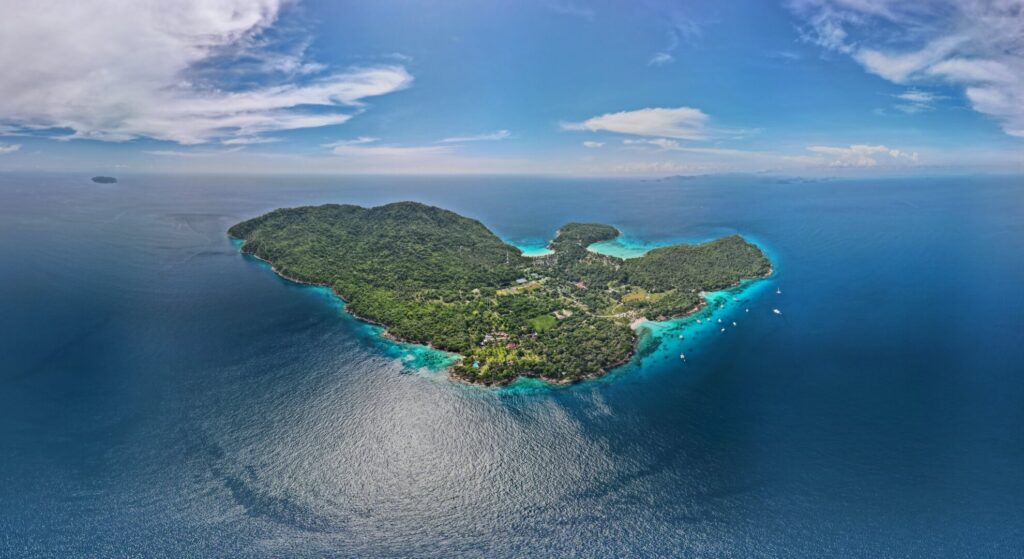
Racha Yai is the larger of the two Racha islands (its smaller, more rugged sibling, Racha Noi, lies further south and is mostly a diving destination). It sits in open Andaman water south of Phuket, which is why the crossing is more exposed than the sheltered Phang Nga Bay run — and why timing your visit to the calmer season and the right side of the island matters.
The beaches
- Patok Beach (Ao Tawan Tok) — the main landing beach; long, white, U-shaped, sheltered. Calm shallows ideal for kids.
- Siam Bay — the other large west-coast beach; clear, sandy, easy snorkelling.
- Kon Kare Bay — east coast; one of the most popular snorkelling spots, especially in green season.
- Lha Bay & Ter Bay — smaller, quieter east-coast bays.
Best time to visit
Racha Yai is busiest and calmest from November to April. May to October is quieter and still very visitable — you simply snorkel the east-coast bays, which are sheltered then. Whatever the season, an early start beats the midday day-trip arrivals.
| Season | Sheltered snorkel side | Conditions |
|---|---|---|
| Nov–Apr | West coast (Patok & Siam Bays) | Calmest, clearest, busiest |
| May–Oct | East coast (Kon Kare Bay) | Quieter, sheltered reefs |
What to do
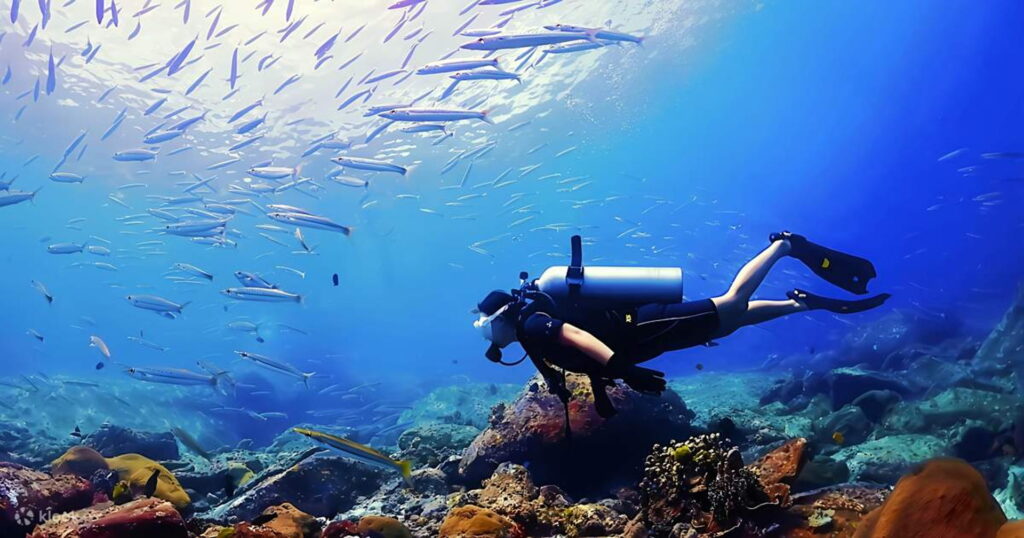
Snorkelling and diving are the headline draws — clear water, hard-coral reefs, and reliable fish life. Beyond the water, the main bays are simply lovely for swimming and a beach day, and the island is far calmer than the big-name stops like Phi Phi. A few low-key resorts mean you can stay overnight, too — and because there’s little light pollution once the day-trip boats leave, Racha is one of the better spots near Phuket for stargazing.
How to visit from Phuket
Because Racha Yai sits in open water south of Phuket, it’s best enjoyed on a comfortable, well-found boat that can read the conditions and pick the right side of the island for the day. A private charter with Simba lets you do exactly that — set your own pace, choose the calmest bays, and avoid the fixed timetable of the big group boats. If you’d like a southern-Phuket snorkel day with a set itinerary, our Coral Delight Private Charter explores the quieter snorkel sites off southern Phuket (Mai Thon, Coral Island and more) from ฿34,870* for the boat — a great alternative if Racha’s open-water crossing isn’t ideal on the day. Talk to us about the best option for your dates and group.
Visiting responsibly
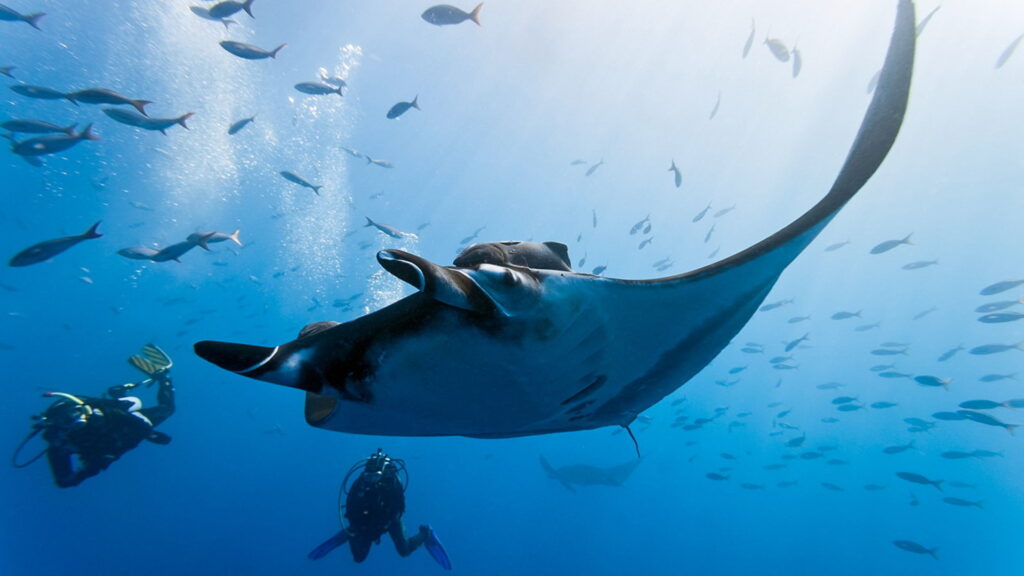
Racha’s reefs are the whole point of the trip, so we brief every group on reef-safe sunscreen and no-touch snorkelling, and we anchor only where it’s permitted. Choosing the sheltered side for the season isn’t just about comfort — it keeps boats off fragile coral and gives you clearer water at the same time. Good seamanship and good conservation tend to go hand in hand out here.