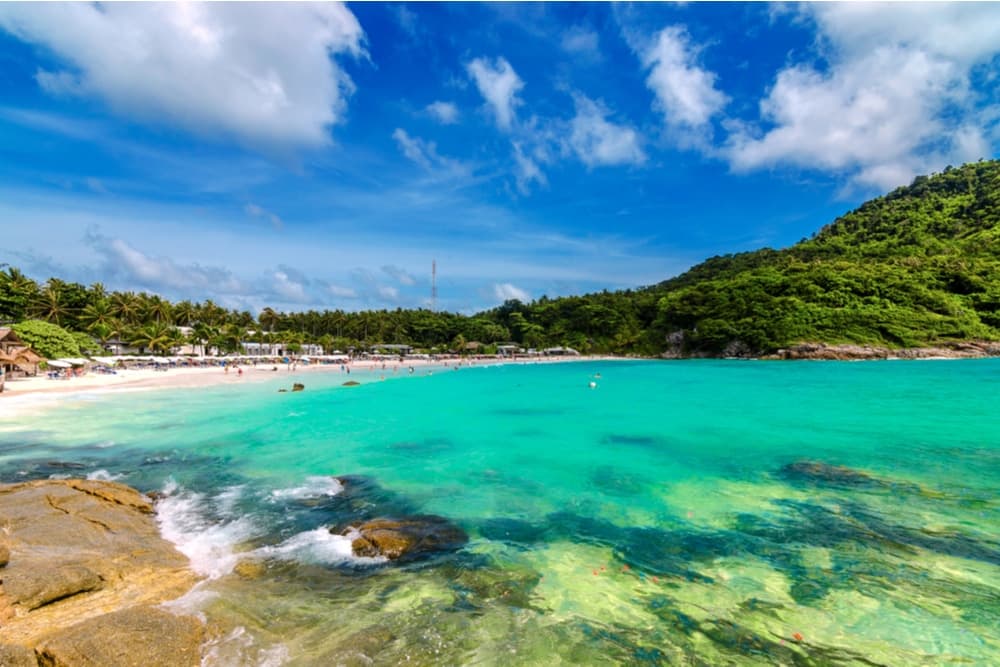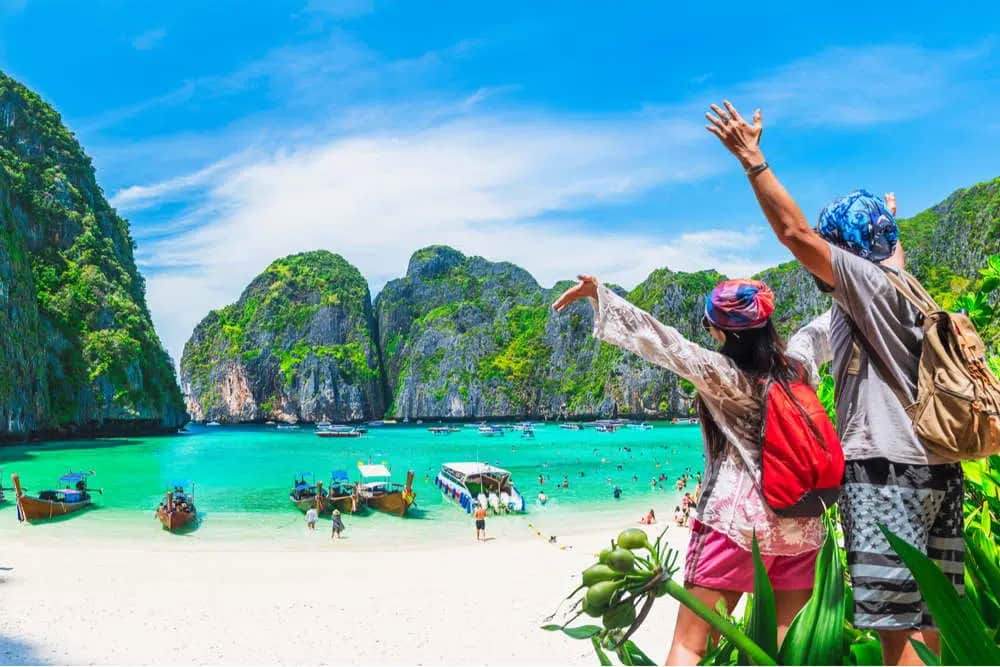


The short answer: the best time to visit Phuket is November to April — the dry ‘high season’, when the skies are clear, the Andaman Sea is calm, and every boat on the island is out making the most of it. The trade-off is peak crowds and peak prices. The southwest monsoon runs roughly May to October: more rain, livelier seas, far fewer people and noticeably lower prices. Here is the part most guides skip — the ‘green season’ is not six months of rain. It is showers and squalls moving through between genuinely good weather windows, and boats run year-round. If your dates are fixed, this guide tells you what to expect month by month. If your dates are flexible, it will help you choose the trade-off you actually want: perfect seas with company, or quieter islands at a better price.

A word on who is telling you this: Simba Sea Trips has operated boats out of Phuket since 2005 and is licensed by the Tourism Authority of Thailand (licence 34/02111). Weather is not an abstraction for us — it is a daily operational decision. Every green-season morning our operations team and local Thai captains read the swell, the wind and the radar and make a straightforward go, change-destination or cancel call before any guest steps aboard. Twenty years of those daily calls is the experience behind every recommendation on this page.
The two seasons, and why Phuket has them
Phuket sits in the Andaman Sea with the Indian Ocean to the west and the enormous landmass of India and the Himalayas to the northwest — and those two neighbours run the island’s weather. From roughly May to October the land heats up relative to the ocean and pulls warm, moist maritime air across the sea: that is the southwest monsoon, arriving as wind, swell and rain. From November to April the flow reverses and dry, cooler continental air settles in: the high season. The word monsoon simply means ‘season’ — it describes a wind direction, not a permanent downpour.
Geography matters for boats, too. Phang Nga Bay sits in protected water northeast of Phuket, sheltered by the island on one side and the Thai mainland on the other — in the green season its swells routinely run one to two metres smaller than the open-water route to Phi Phi. The Phi Phi crossing (about 1 hour 10 minutes by speedboat) is more exposed in its second half, which is exactly why day-by-day judgement matters more than the month on the calendar.
Phuket weather month by month
| Month | Weather | Sea state | Crowds & prices | Verdict |
|---|---|---|---|---|
| January | Dry, sunny, low humidity; around 32°C | Calm and stable | Peak crowds, peak prices | Superb weather — book everything early |
| February | The driest month of the year, roughly 9 hours of sun a day | Calm and stable | Busy, slightly better deals than January | Arguably the single best month |
| March | Hot, up to about 34°C, still very dry | Calm and stable | Crowds begin to thin | Excellent all round |
| April | The hottest month; humidity building, first real showers | Stable early, changing late | Songkran (mid-April) spikes visitors | Great seas, big festival energy |
| May | Warm with intermittent showers between sunny spells | Swell building late in the month | Low-season prices begin | Underrated shoulder month |
| June | More rain than May but plenty of sunny days between | Variable; monitored daily | Quiet, flights and hotels cheap | Best value of the early green season |
| July | Similar to June with slightly more rain | Variable; monitored daily | Quiet outside European school holidays | Good value, pack a light rain layer |
| August | Green-season pattern of showers and sun windows | Variable; monitored daily | Quiet; Maya Bay closed from 1 Aug | Fine trip if you stay flexible |
| September | Statistically the wettest month | The roughest window of the year | The quietest, cheapest month | Cheapest — accept some weather risk |
| October | Rain easing through the month; conditions improving | Settling; parks reopen mid-month | Shoulder pricing; Vegetarian Festival | Smart early-bird shoulder month |
| November | Dry season returns; skies clear | Calming quickly | High season begins; Loi Krathong | The sweet spot before peak crowds |
| December | Dry, sunny, festive | Calm and stable | Builds to the Christmas/New Year peak | Brilliant — book well ahead |

High season (November–April): how to do it well
The weather needs no salesmanship — the planning does. In peak months the best accommodation and the good boats sell out early, so book tours and hotels well ahead, especially around Christmas, New Year and Chinese New Year. The single most effective crowd tactic on the water is simple: leave earlier than everyone else. Our Phi Phi Sunrise join-in tour (฿5,310 per person, all-inclusive — national park fees, hotel pickup, breakfast and lunch included) departs Boat Lagoon Marina at 6am with a maximum of 18 adults aboard, so you watch the sunrise at sea during the crossing and reach the islands before the day-tripper fleet arrives. April deserves its own note: it is the hottest month, and mid-April brings Songkran — Thailand’s exuberant water festival — which is either a highlight or a reason to shift your dates, depending on the holiday you want.
The honest case for the green season (May–October)
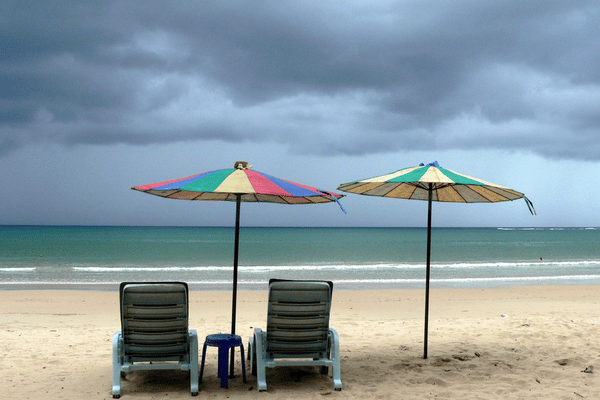
We run boats twelve months a year, so we have no incentive to pretend the monsoon away — and equally no reason to let it be overstated. A typical green-season day is not a washout; it is a passing squall, a bright afternoon, and islands with a fraction of the high-season foot traffic. May and October are the shoulder gems: near-high-season weather at low-season prices. June and July usually offer the best value-to-sunshine ratio. September is the wettest and roughest month — it is also the cheapest and quietest, a fair trade if your plans can flex by a day. Sheltered Phang Nga Bay keeps working through most conditions that would make the open Phi Phi crossing uncomfortable, which is why a ‘change of destination’ is sometimes the smart green-season answer rather than a cancellation. Our rainy season boat-tour guide breaks down exactly which trips run, month by month.
And if the weather does win: when we cancel a trip for weather, the deposit is refunded in full. That policy is what lets us be straight with you about the wet season — the risk of a rained-off morning sits with us, not with your holiday budget.
What does a monsoonal day on the water actually look like? Usually: an early check of wind and radar, a squall that passes before mid-morning, then long bright spells with dramatic skies — some of the best photographs of the year are taken in the green season. The difference from high season is simply that the plan is confirmed on the morning rather than assumed the week before.
Island closures: what actually shuts, and when
Two closures are worth building into green-season plans. The Similan and Surin Islands national parks close every year from roughly mid-May to mid-October for ecosystem recovery — conveniently overlapping the roughest seas — and reopen for the high season. Maya Bay on Phi Phi Leh follows its own annual conservation closure: in 2026 it is closed from 1 August to 30 September and reopens on 1 October. The rest of the Phi Phi islands stay open year-round, and during the Maya Bay closure our Phi Phi itineraries substitute Bamboo Island, so an August or September booking still gets a full day. If a specific beach is the reason you are coming, check its status for your dates — and time an October trip for the reopenings.
Planning a specific trip? Start here
This page is the island-wide overview; for sharper questions we keep dedicated guides:
- The best time to visit Phi Phi from Phuket
- The best time for a Phang Nga Bay tour
- Phuket sea conditions in November
- When to book a boat charter — the seasonal booking guide
- Things to do in Phuket when it rains
- Rainy season across Thailand — if Phuket is one stop of several
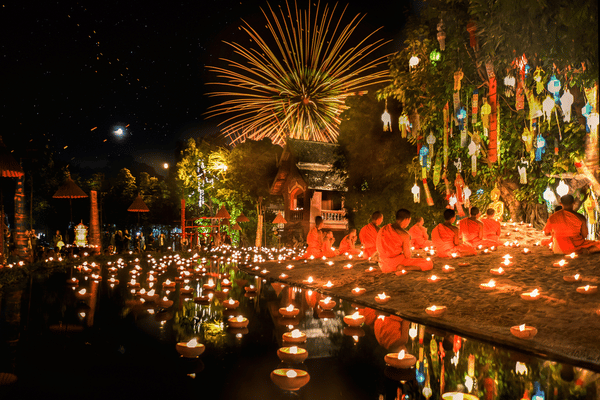
Festival timing can also anchor a trip: Songkran in April, the Vegetarian Festival in October, and Loi Krathong lighting up the water in late November.
So — when should you come?
If you want guaranteed calm seas and do not mind sharing them: November to April, booked early, with February the pick of the bunch. If you want Phuket at its quietest and best value, and you can keep a flexible day in your itinerary: May, June or October. Either way, the boats will be running — and the go/no-go call on the morning itself will be made by people who have been reading this stretch of the Andaman for twenty years.