

For most Phuket visitors the best currency-exchange rates are at independent booths in Phuket Town and Patong — not at the airport, and not at the hotel reception desk. The operators worth knowing by name are Super Rich Thailand (multiple Phuket branches), Money Shop (Patong and Phuket Town), and Value Plus (Central Phuket Floresta), with Mamy Exchange historically the go-to among locals in the Phuket Town / east-coast band. Airport booths typically run 3–5% below in-town rates, and hotel desks 5–8% below — on a $1,000 exchange that’s a 1,500–2,500 baht gap. Withdraw a small float at the airport for the taxi and first meal, exchange the rest in town, and the single most valuable tip: at any ATM or card terminal that offers to charge you in your home currency rather than Thai baht, always decline. That prompt is dynamic currency conversion (DCC), and accepting it adds a 3–7% markup that the booth or terminal pockets. Bring crisp, large-denomination notes (USD $100 bills, EUR €100, GBP £50) — they get the best rates. This guide is the operator’s-eye version, written from an SST charter base on the east coast.
Why I’m writing this — operator perspective from Boat Lagoon Marina
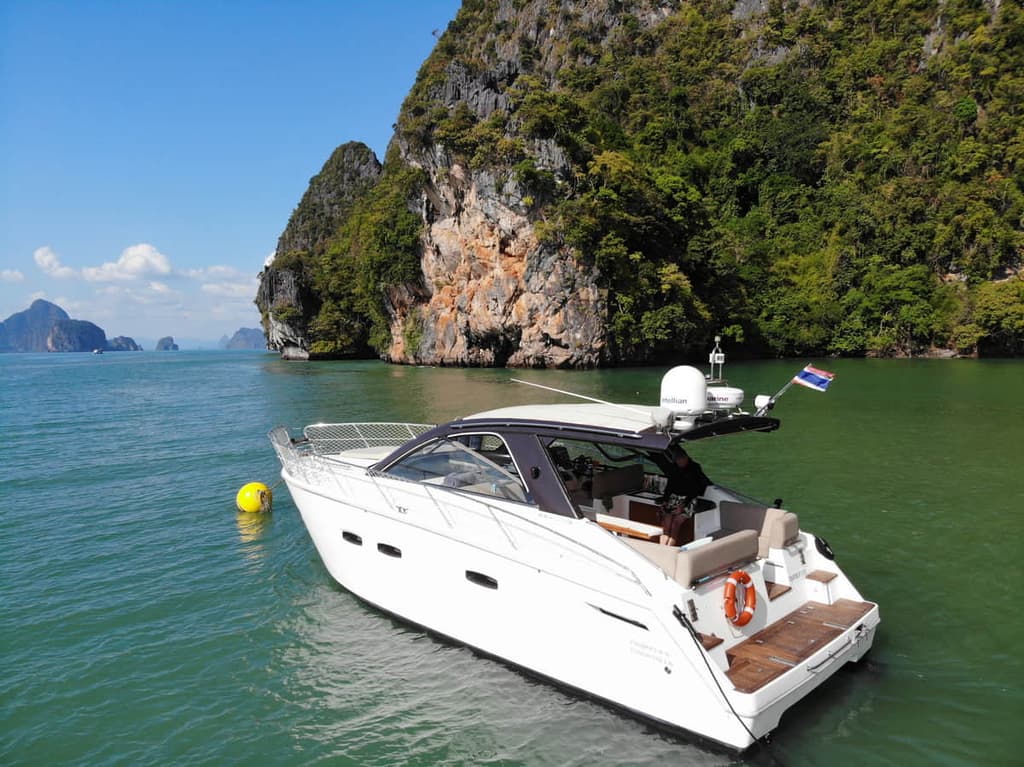
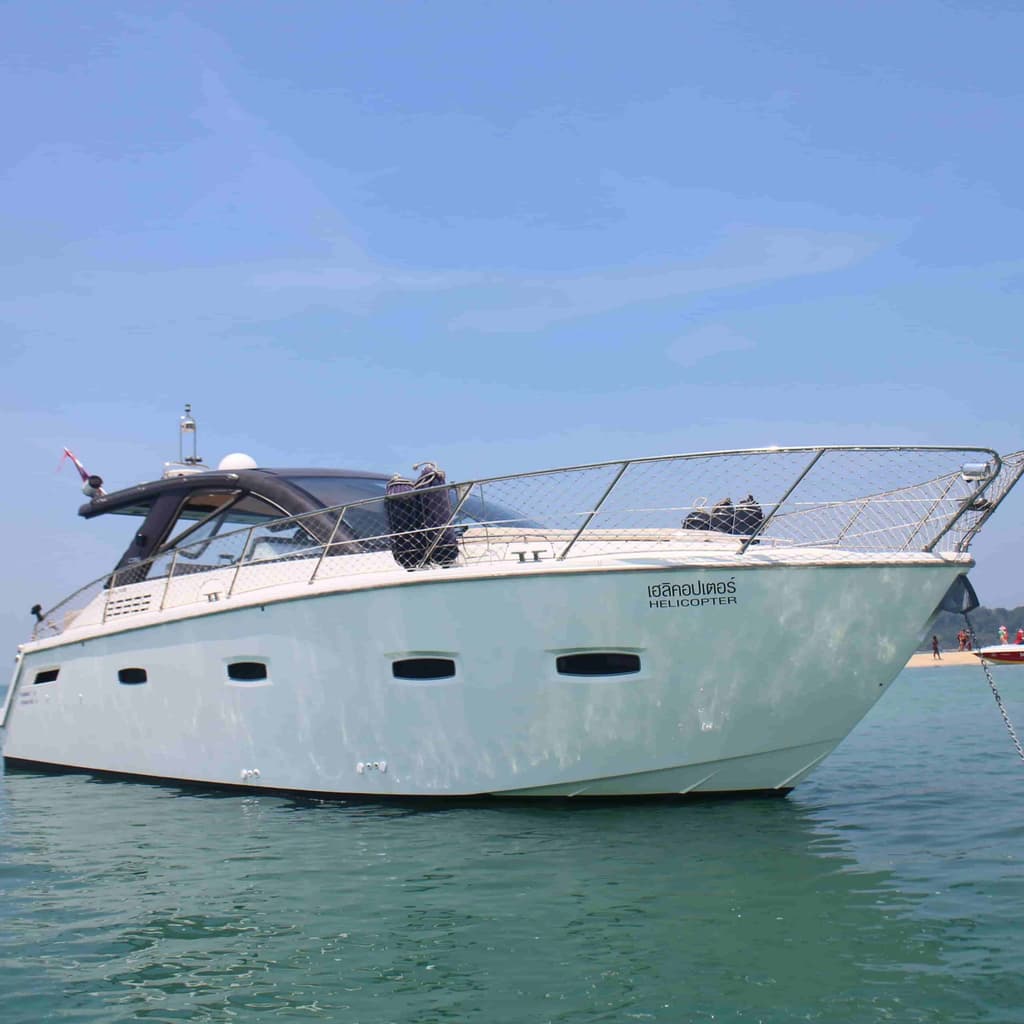
I’m Paul Chappell, owner-operator of Simba Sea Trips. Simba Sea Trips was founded in 2005 — twenty years this year — and holds Tourism Authority of Thailand licence 34/02111. We run small-group speedboat tours and private charters out of Soho Pool Club at Boat Lagoon Marina on Phuket’s east coast. I’m a former international airline captain — Lead Captain on a Boeing Business Jet, qualified Flight Instructor — with 23+ years of professional aviation safety background, and a commercial marine operator in Andaman waters since 2014. The full captain’s bio sits here.
After more than a decade of fielding the same currency questions from arriving guests on the boat — “where should I have exchanged it?”, “is the airport rate really that bad?”, “my card just asked me to pay in pounds, did I get scammed?” — I’ve written down what I’d actually tell someone the day before they fly. None of this is theoretical. The booths named below are the ones our own crew and office staff use, and the rate-gap framing comes from years of guests comparing notes on the boat home.
Where to exchange in Phuket — by neighbourhood
Currency-exchange rates in Phuket are surprisingly consistent within a band, and the band is set by the major operators. Independent booths — Super Rich, Money Shop, Value Plus — typically clear within about 0.5% of the live mid-market XE rate. Bank counters at Bangkok Bank and Krungsri sit slightly behind that, usually 0.5–1% wider on the spread. Airport booths run 3–5% wider. Hotel desks run 5–8% wider. Once you understand the band, the question of “where to exchange” becomes the question of “which neighbourhood are you in this afternoon.”
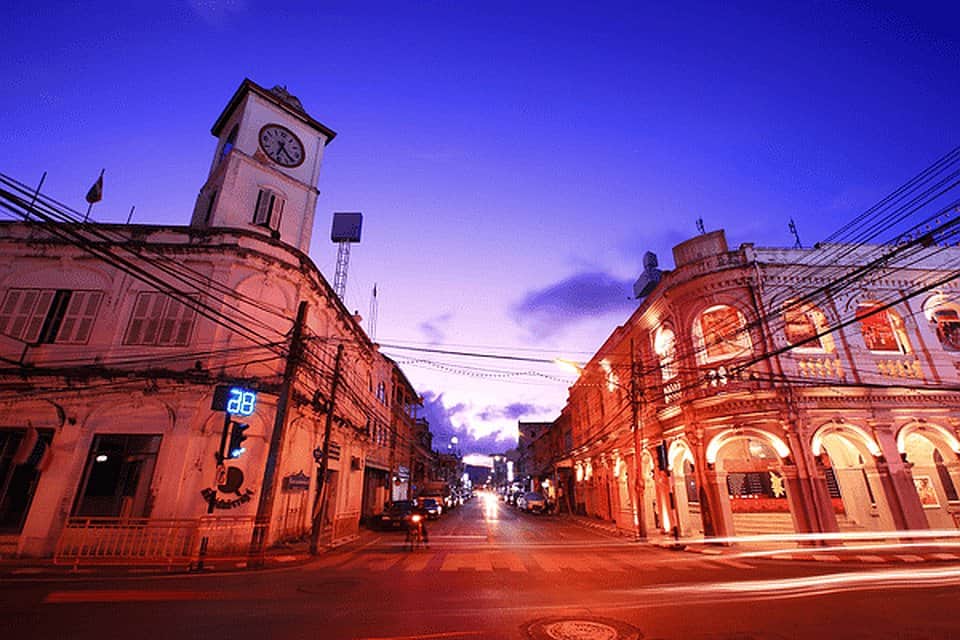
Phuket Town. Old Phuket Town is the densest concentration of independent booths on the island, and the rates here are typically the tightest. The shophouse strips along Thalang Road and Phang Nga Road house several Super Rich branches as well as smaller independents. If you have an hour and want the best rate available without travelling specifically for it, this is the neighbourhood — easy to compare three or four counters within a five-minute walk before committing.
Patong. Patong has its own cluster of booths, most clearly visible along Bangla Road and on the stretches of Rat-U-Thit 200 Pi Road running parallel to the beach. Super Rich and Money Shop both have Patong branches. Patong rates run a touch behind Phuket Town’s, but the convenience for anyone staying in the southwestern resort strip is the deciding factor.
Kata and Karon. Smaller cluster, more variation between booths. Worth checking the displayed rate against XE on your phone before handing over cash — there are good operators here, but also a few that quote tourist rates 1–2% wider than the Patong norm.
Boat Lagoon, Ko Kaeo, and the east coast. The east coast has historically been a quieter exchange neighbourhood — there are fewer booths than in Patong or Phuket Town. Mamy Exchange has long been the locals’ first reference in this area; if you’re staying near our marina or on the east-coast side generally, ask your hotel reception to point you to the nearest currently-operating Mamy or independent counter before committing.
Phuket International Airport (Mai Khao). Airport booths are slow, queues are long after late-arriving international flights, and rates are 3–5% behind in-town. Use them only for a small float — enough for a taxi or Grab to your hotel and an early meal. Bangkok Bank and other Thai bank booths sit airside as well as in the arrivals hall.
The DCC trap — why you should always select Thai baht
This is the single most actionable piece of advice on this page. When you use a card at a Thai ATM or point-of-sale terminal, you’ll often be offered a choice: “withdraw 5,000 THB” or “withdraw the equivalent in GBP / USD / EUR.” That second option is dynamic currency conversion (DCC), and accepting it lets the ATM operator or merchant set their own exchange rate, typically 3–7% worse than what your own bank would have given you. The ATM operator pockets the difference; your bank still applies whatever foreign-transaction fee it normally would.
Always select Thai baht. Your card issuer’s rate is almost always closer to the live mid-market rate on XE than the DCC rate on offer. This applies at every Thai ATM, every restaurant card terminal, every hotel checkout. If a screen says “your home currency or THB?” — choose THB. Every time. The 3–7% you save on a 30,000 THB hotel bill is roughly the cost of dinner for two at a good Phuket restaurant.
A second ATM-specific note: Thai bank ATMs charge a flat foreign-card fee of 220 THB per withdrawal regardless of amount. The fee is the same whether you withdraw 1,000 baht or 30,000 baht, so withdraw in larger chunks rather than small ones. The maximum per-transaction is usually 30,000 THB at Bangkok Bank and Krungsri ATMs, slightly less at others.
Phuket airport exchange — when it actually makes sense
Despite the rate gap, the airport booths have a legitimate role: arriving travellers who have no Thai baht at all, who need cash for a taxi or Grab to the hotel and possibly an early dinner before in-town booths close. The right amount to exchange at the airport is enough to cover the first afternoon and evening — call it 3,000 to 5,000 THB for a couple, more if your hotel transfer is being paid in cash on arrival. Before you even reach the booth, make sure your arrival paperwork is sorted: our Thailand entry requirements guide covers the TDAC arrival card and the 2026 visa-exemption changes.
Exchange the rest the following morning in Phuket Town, Patong, or the nearest independent booth to your hotel. Most independent booths open by 09:00 and close by 21:00; bank counters run shorter hours (typically 09:00–16:00 weekdays, closed weekends). Krungsri’s foreign-exchange page lists current services and operating hours, and the Bank of Thailand publishes the official daily reference rates.
If you arrive on a late-evening flight and your hotel transfer is pre-paid, you can skip the airport booth entirely — but only if you’ve already loaded a multi-currency card (Wise, Revolut, or similar) or if you’re prepared to use a card at your hotel for the first night. The official mid-market reference rate is published by the Bank of Thailand and is the benchmark to compare any booth’s quote against.
What to bring — denominations and note condition
Thai exchange booths quote different rates for different denominations of the same currency, and condition matters. Crisp, unmarked, large-denomination notes get the best rates. A USD $100 bill in good condition routinely clears 0.5–1% better than the same amount in $20s. A folded or marked note can be quoted 0.5% behind the headline rate or refused outright. The single best preparation a foreign traveller can make is to ask their home bank for new $100 / €100 / £50 notes specifically for the Phuket trip.
USD is the most-accepted currency, followed by EUR and GBP. AUD, CAD, SGD, HKD, and CHF are accepted at major booths but rates are slightly wider. JPY, CNY, INR, RUB, and most other Asian and Middle Eastern currencies are accepted at the larger Super Rich and Money Shop branches but not at every smaller booth — check before you arrive. Carrying a mix of two major currencies (e.g., USD plus EUR) is a reasonable hedge against any one rate moving against you.
Multi-currency cards such as Wise and Revolut sidestep the cash-condition question entirely — load the card in your home currency, withdraw THB from a Thai ATM at the local rate, decline the DCC prompt. Combined with a small USD cash float as backup, this is the lowest-friction approach for most travellers.
Tour-day cash planning — what to actually carry
If you’re spending a day on one of our small-group boat tours — say the Phi Phi Sunrise Tour (from ฿5,310, all-inclusive) — most of the day’s costs are already included in the booking: hotel transfer, light breakfast, buffet lunch at Soho Pool Club, snorkelling gear, life jackets, national park fees, water and soft drinks. You won’t need much cash on board. A small float of 1,000 to 2,000 THB covers tips for the crew (entirely optional, never expected — but appreciated), drinks from the bar if you want a beer or a soft drink beyond what’s included, and any small purchases at island kiosks. Alcohol is not included on join-in tours and is sold by the boat at standard cabin prices.
On a private charter the same logic applies — every cost in the published rate is included, and a small cash float for tips and incidental on-island purchases is plenty. The Locals Island Tour at a flat group rate works the same way. Don’t carry several days’ worth of cash on the boat — it’s a wet environment, and there’s nothing on board you can’t pay for with a small float. Leave the bulk of your cash in the hotel safe.
Operator’s-eye safety notes
Beyond rates, the operator-perspective practical safety advice we give every guest: keep your passport at the hotel safe (booths only need to see it briefly to write down the number, then it goes straight back to you); never exchange with anyone outside a licensed booth — Thailand’s licensed counters are clearly marked, well-lit, and quote rates on the outside-facing display; never accept a “better rate” from someone approaching you in the street; and if a booth’s quoted rate is dramatically better than the booth next door, walk away. Thailand’s licensed booths cluster their rates tightly. An outlier is almost always tied to hidden fees, a short count, or counterfeit risk.
Keep small denominations separate from large for tuk-tuks, street food, and beach kiosks — handing over a 1,000-baht note for a 60-baht satay invites confusion. And if you’re heading into more remote areas of the island — the north coast above Mai Khao, or the small-village side of the east coast — carry physical cash. Card terminals are inconsistent outside the main resort strips. More on getting around the island in our wider Phuket travel guide section.
Browse our tour calendar — trusted by 5,903 verified reviewers across TripAdvisor, Google & GetYourGuide.