

Pileh Lagoon is a 600-metre emerald inlet cut into the limestone of Phi Phi Leh — the uninhabited island in Krabi province that also holds Maya Bay, one headland away. There’s no pier and no road: you visit by boat, either on a day trip from Phuket (about 1 hour 10 minutes to Phi Phi by speedboat from Boat Lagoon Marina) or by longtail from Phi Phi Don or Krabi. The water inside is calm, shallow at the edges and vivid green, which is why it’s one of the most photographed swim stops in the Andaman — and why the middle of the day gets crowded. Arrive early and you get the lagoon close to empty.
We’ve been running boats to Phi Phi Leh since 2005, and after twenty years the pattern hasn’t changed: at 8am Pileh is quiet water and birdsong between 100-metre cliffs; by late morning it’s a car park of tour boats. That gap is the single most useful thing to know about visiting. It’s also why our Phi Phi day starts at sunrise — the run across is made in first light, and the lagoon is one of the first stops of the morning rather than a midday queue.
The easiest way to swim Pileh from Phuket is the Phi Phi Sunrise Tour (join-in, from ฿5,310 per person, eight hours, maximum 18 adults), which gives the lagoon real time in the water rather than a drive-through. If you’d rather set your own pace, the private Phi Phi sunrise charter (from ฿40,700) follows the same early-start logic with your own boat. Displayed prices are final — no fees added at checkout.
Either way, you’ll be with local Thai captains who read this water daily, on a small boat that can sit inside the lagoon rather than idling at the entrance. The rest of this guide covers what the lagoon is actually like, the swimming and snorkelling, Viking Cave next door, and when to go.
Pileh Lagoon at a glance
| Where | Phi Phi Leh, Krabi province (next bay to Maya Bay) |
| Getting there | Boat only — ~1hr 10min Phuket→Phi Phi by speedboat |
| Water | Calm, emerald; ~1m at the shallow entrance areas, deeper mid-lagoon |
| Best time of day | Early morning, before ~10:30 |
| Best season | November–April for the calmest, clearest water |
| National park fee | ฿400 foreign adults (Hat Noppharat Thara–Mu Ko Phi Phi) |
| Crowd level | Low early, heavy midday |
What the lagoon is like
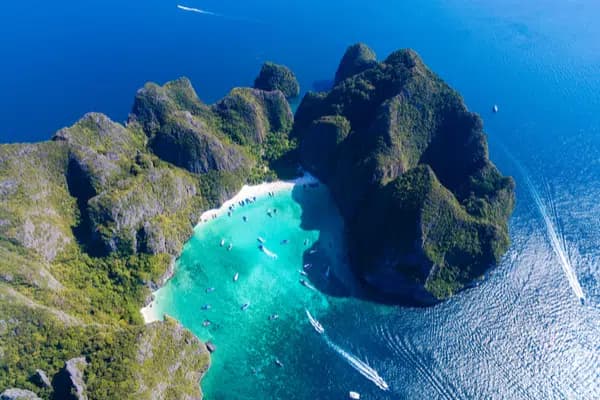
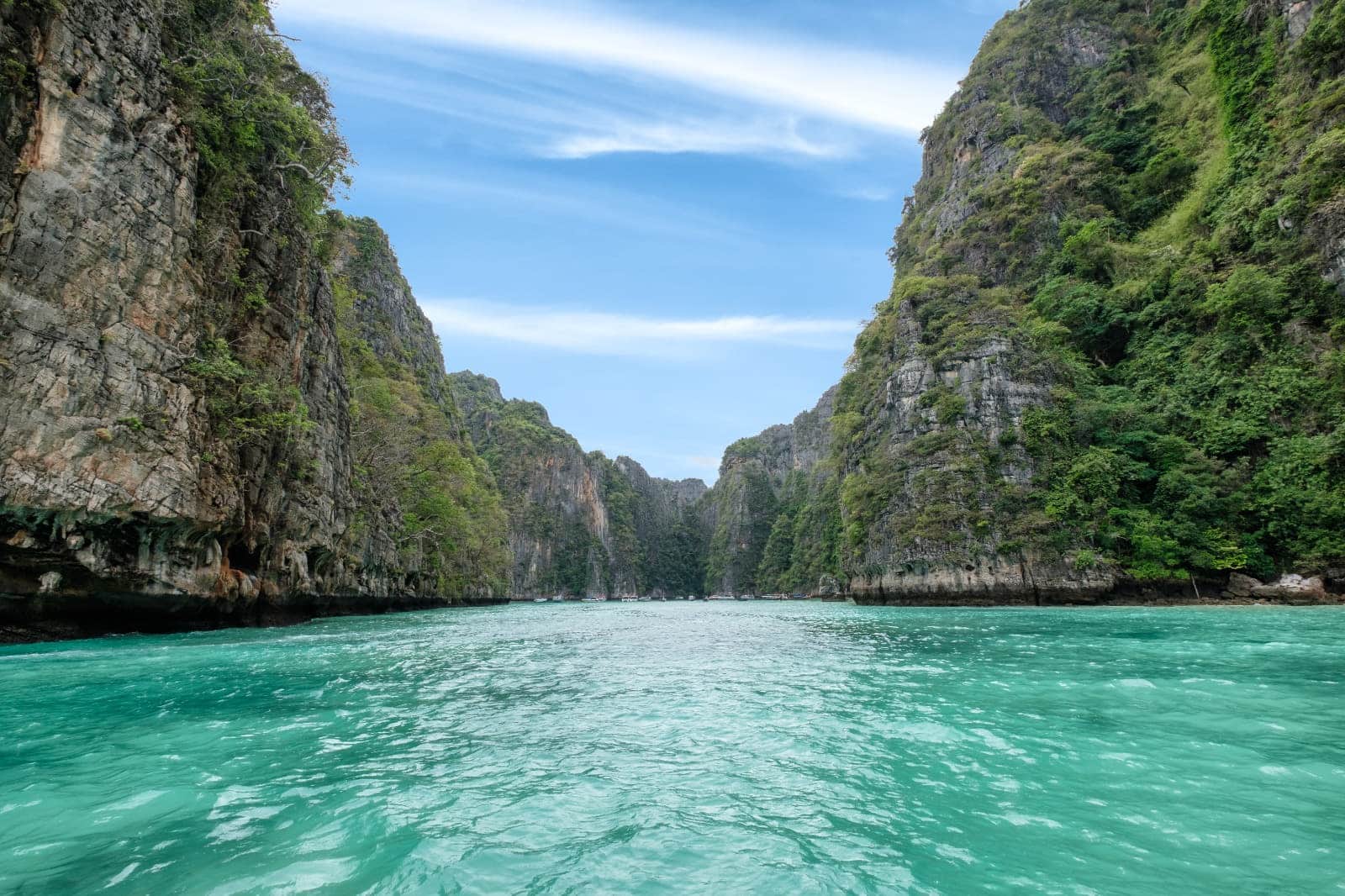
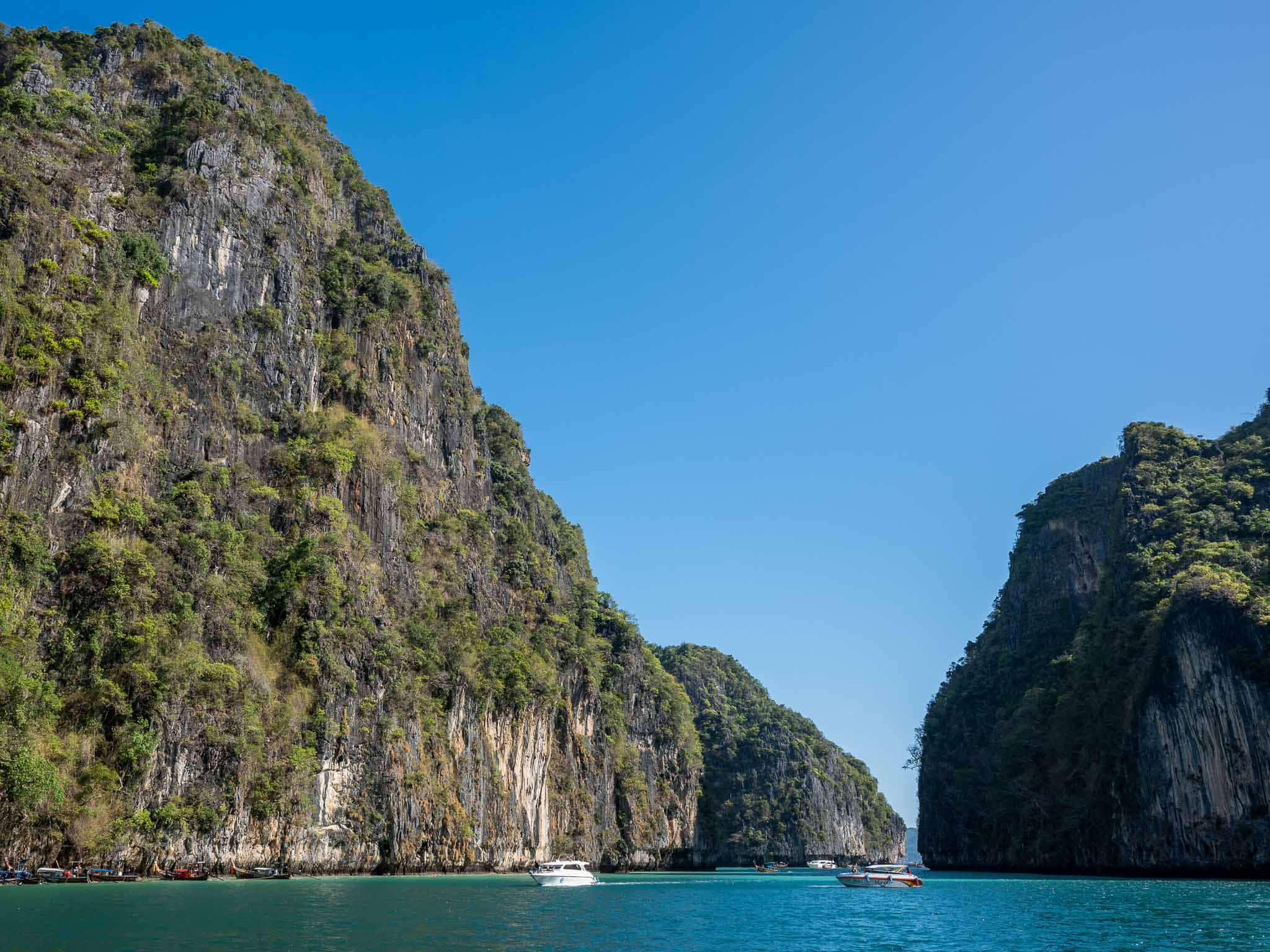
The inlet runs roughly 600 metres from its narrow entrance to the back wall, ringed by sheer karst cliffs with rainforest clinging to the ledges. From the air the bay reads as a rough heart shape — you’ll have seen the drone shots, though note that drone flying inside the national park requires permission, so don’t count on flying your own. The water colour is the draw: over the pale sand bottom the lagoon goes a deep glass-green that doesn’t look real in photographs and somehow looks better in person.
In twenty years of bringing guests here, the moment that lands hardest is the engine cutting inside the lagoon early in the morning — cliffs going straight up on three sides, water flat as a pool, and nobody else in it. That silence is gone by late morning, which is the honest trade-off of one of Thailand’s most famous swim spots.
Swimming and snorkelling in Pileh Lagoon
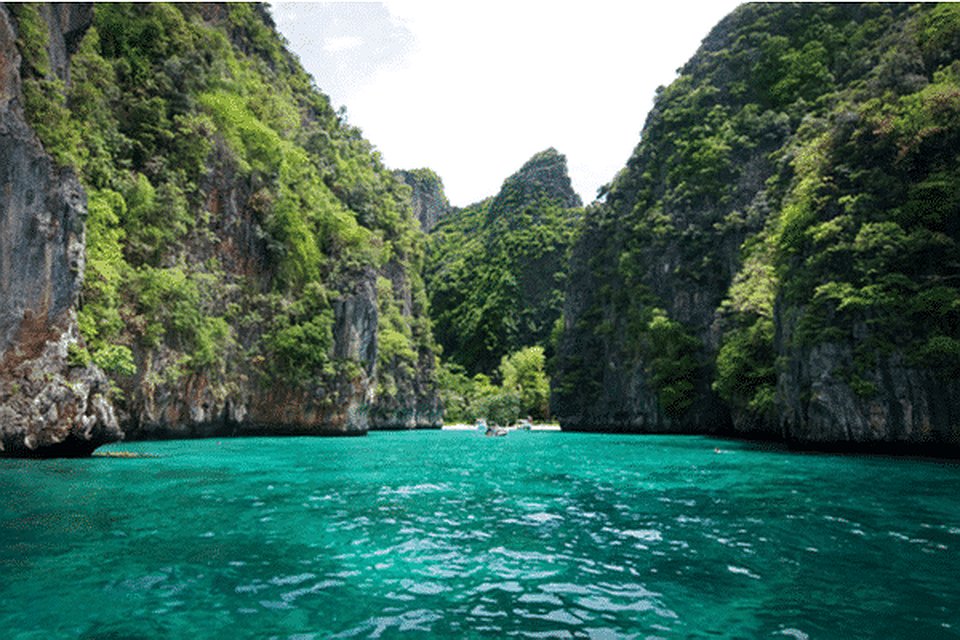
The inner lagoon is a swimming spot more than a snorkelling one: the bottom is fine sand with no coral, entry is gentle (about a metre deep at the shallow areas, so nervous swimmers can stand), and the water is bath-warm year-round. There’s a small strip of sand near the entrance if you want to wade out rather than swim off the boat.
The fish are at the lagoon’s seaward corner and along the rocky edges: clouds of sergeant major damselfish, rabbitfish, and moon wrasse that are as curious about you as you are about them. For proper reef snorkelling, the surrounding Phi Phi sites do it better — our sunrise itinerary pairs the Pileh swim with two hand-picked snorkel reefs the same morning, chosen on the day for conditions.
Viking Cave, next door
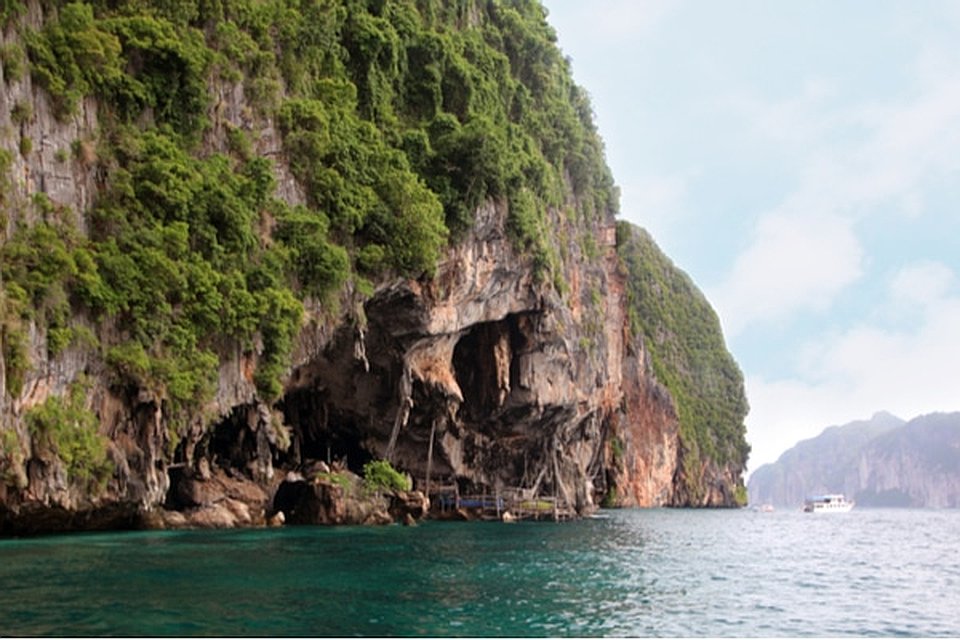
Just outside Pileh’s entrance, a wide cave mouth opens above the waterline: Viking Cave, named for the old wall paintings inside that resemble square-rigged sailing ships. Nobody has convincingly explained who painted them or when. The cave is a working birds’-nest concession and closed to landings, so every operator — including us — views it from the water on the way past; it’s a drift-by, not a stop. It’s still worth the look up. For the full story, see our Viking Cave guide.
When to go (and the Maya Bay closure)
Morning, always. The lagoon is calmest and clearest early, and you’ll share it with the fewest boats. Seasonally, November to April brings the most settled seas and the best visibility; in the green season (May–October) the lagoon itself stays sheltered, but crossings depend on conditions and your operator’s judgement.
One current note: Maya Bay’s beach closes to landings every year from 1 August to 30 September for reef recovery. Pileh Lagoon is not affected — boats still enter and swim it year-round — and during the closure our sunrise itinerary substitutes Bamboo Island for the Maya Bay landing while keeping the Pileh swim. If Maya Bay is the reason you’re coming, plan for October onward; if the lagoon is, any month works. More on the wider island in our Phi Phi Islands guide and our Maya Bay guide.
Getting to Pileh Lagoon from Phuket
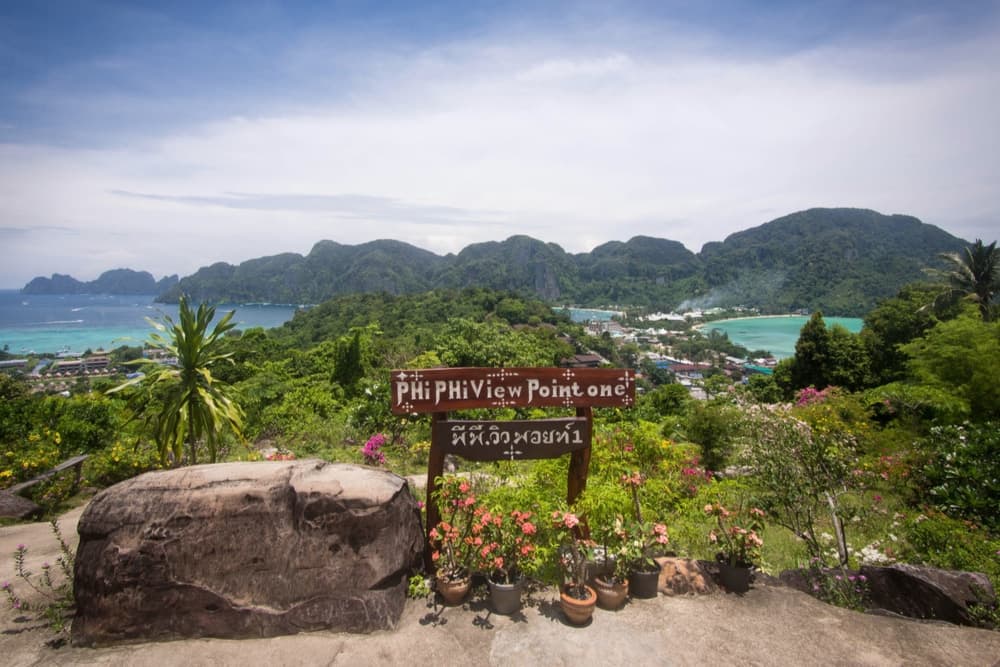
From Phuket the practical option is a speedboat day tour — about 1 hour 10 minutes each way to Phi Phi, leaving early to make the morning window. From Phi Phi Don or Krabi you can hire a longtail, which is slower and weather-exposed but flexible if you’re staying on the islands. Whichever you choose, ask one question: what time does the boat reach Pileh? Before 10am and you’ll see the lagoon at its best; after 11 and you’ll see the queue. Monkey Beach and the Phi Phi viewpoints round out the same day if you’re island-based.
If you want the early window without organising it yourself, that’s exactly what the Phi Phi Sunrise Tour was built for — from ฿5,310 all-inclusive, departing Boat Lagoon Marina at 6am, back for a late lunch at Soho Pool Club.