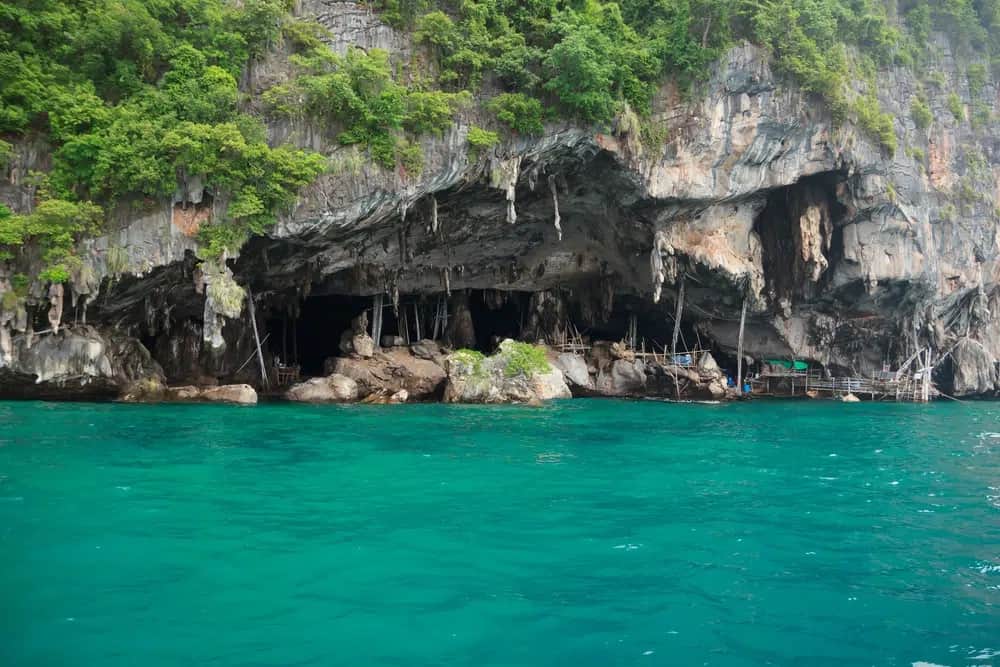


The Viking Cave — known in Thai as Tham Phaya Nak — is a large limestone cavern in the eastern cliffs of Ko Phi Phi Leh, famous for two things: the ancient boat paintings that gave it its "Viking" name, and a centuries-old trade in edible birds' nests harvested from its walls. You can't go inside, but it's a striking, atmospheric stop viewed from the water on a Phi Phi island tour.
Here's the story behind the Viking Cave — where the name comes from, the remarkable birds' nest industry inside it, and how to see it for yourself.
Why is it called the Viking Cave?
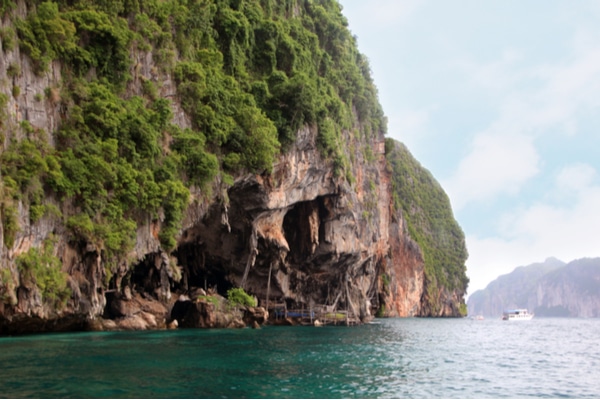
The cave takes its English name from a set of paintings on its eastern and southern walls, near the base of the cliff. They depict different kinds of boats — including one that resembles a Scandinavian Drakkar longship, which is where "Viking" comes from. In reality the paintings are relatively recent and were almost certainly drawn by sailors and traders who sheltered in the cave during monsoon storms, more likely depicting European trading ships from the age of exploration than any actual Viking voyage. The Thai name, Tham Phaya Nak, means "cave of the serpent king."
The cave of the birds' nests
The Viking Cave is also one of Thailand's most important sources of edible birds' nests. High on its dark walls and ceilings, cave-dwelling swiftlets — the edible-nest swiftlet among them — build small, cup-shaped nests almost entirely from their own hardened saliva. These nests are the key ingredient in birds' nest soup, one of the most expensive delicacies in the world, prized in Hong Kong and beyond and selling for thousands of dollars per kilogram. To collect them, local harvesters climb fragile-looking bamboo scaffolding and rope rigs high into the cave — a genuinely dangerous traditional trade that has continued here for generations.
Can you go inside the Viking Cave?
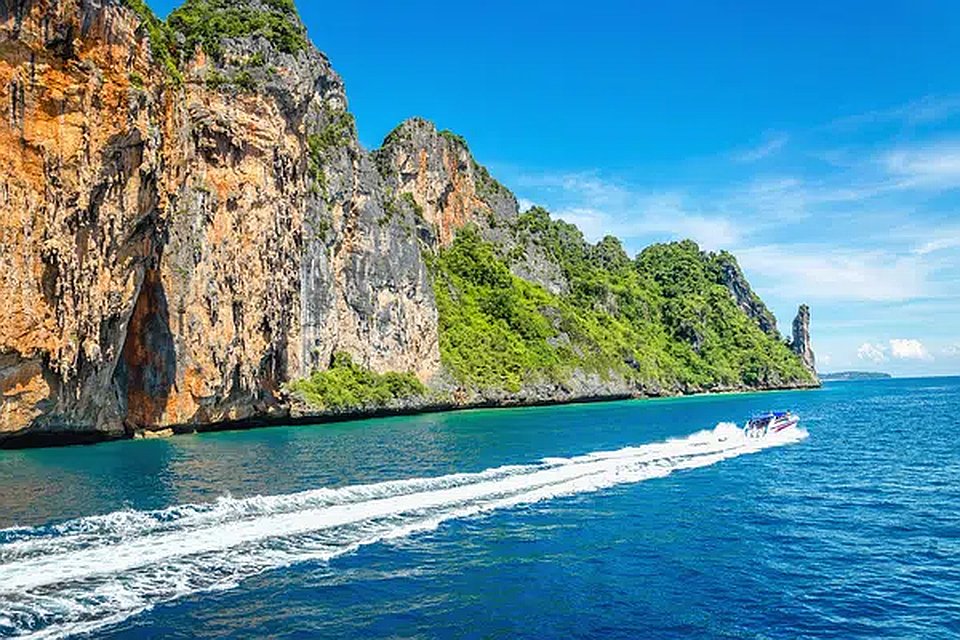
No — the cave isn't open to tourists, both for safety and to protect the birds' nest harvest. Instead, boats slow down near the entrance so you can look in, photograph the towering cliff, and pick out the bamboo scaffolding and ropes the harvesters use. During the breeding season you'll often see the tiny, fast swiftlets darting and diving around the cliff face in search of food. Having spent years running boats through these islands, I can tell you the Viking Cave rewards a slow, early pass — in the soft morning light, with the cliffs glowing and few other boats around, it's far more atmospheric than the midday scramble.
Seeing the Viking Cave on a Phi Phi tour
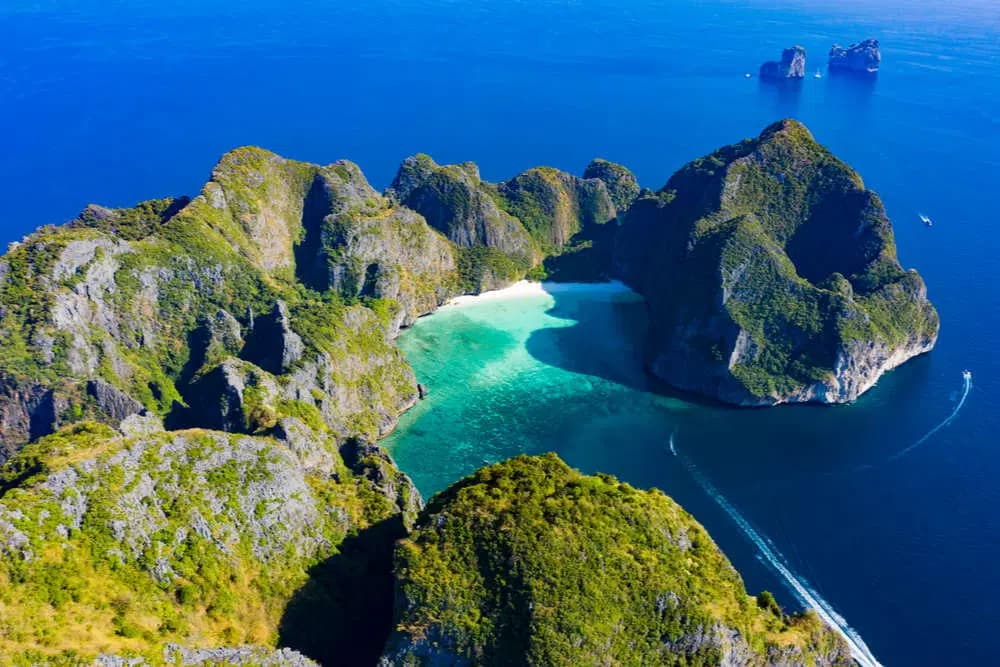
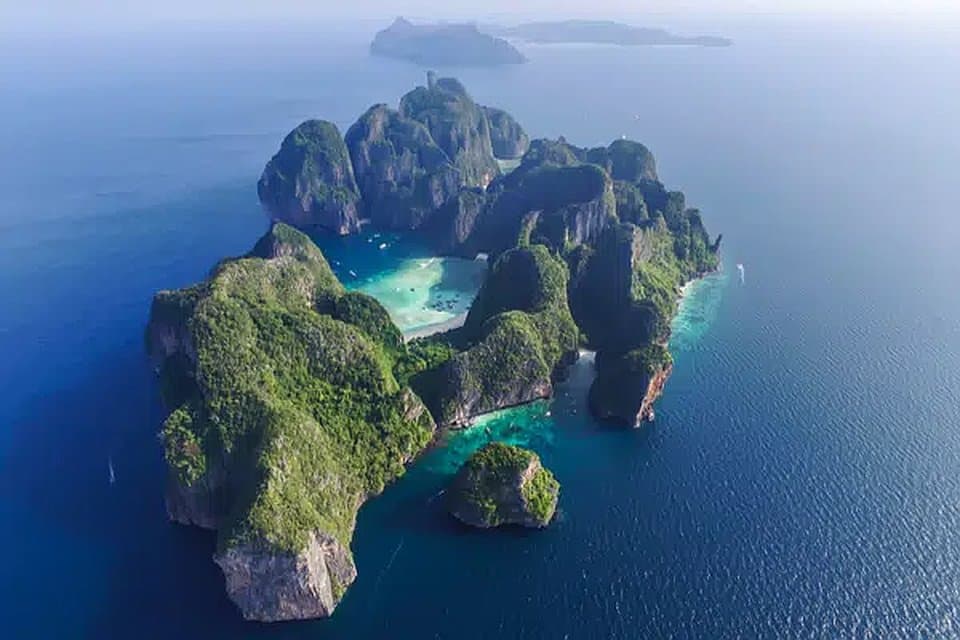
The Viking Cave sits on the same Ko Phi Phi Leh coastline as Maya Bay, Pileh Lagoon and Loh Samah Bay, so it's a natural part of a Phi Phi day. Our Phi Phi Sunrise tour (from ฿5,310) takes it in alongside those headline stops, reaching this stretch of coast early — before the day-tripper fleet arrives — so you see the cave and its cliffs at their quiet, golden best.