

Patong Beach is Phuket’s busiest resort town: a three-kilometre curve of sand on the island’s west coast backed by the densest concentration of hotels, restaurants, malls and nightlife in southern Thailand. Is it worth your time? Honestly — yes, as long as you know what you are choosing. Patong is not the quiet, palm-fringed Thailand of the postcards; it is the loud, convenient, endlessly entertaining version, with a genuinely good beach attached. This guide covers what the beach itself is actually like, when it is safe to swim, what to do on and off the sand, how Bangla Road works after dark, and — because the best of Phuket is offshore — how to use Patong as a launchpad for the islands.
The beach itself: better than its reputation
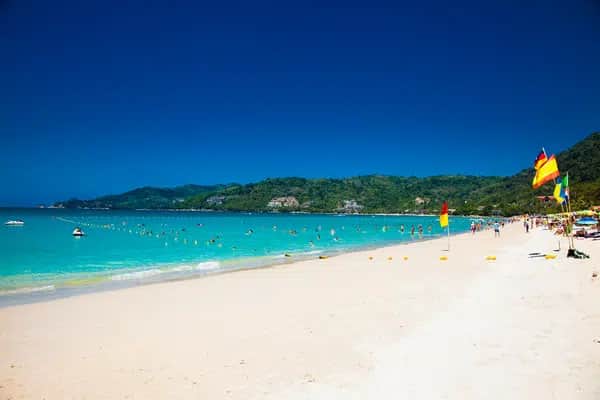
Strip away the town behind it and Patong Beach is a legitimately good beach — wide, soft light-coloured sand, gently shelving, with the full sweep of the Andaman Sea in front of you. The middle section (roughly opposite Bangla Road) is where the crowds, jet-skis and parasail operators concentrate. Walk ten minutes toward either end and the density drops off noticeably; the northern end near Kalim is the calmest stretch. Sunbeds and umbrella pitches operate in designated zones, kiosks and beach vendors keep you fed and watered, and the beachfront road is a pleasant early-morning or sunset walk before the town fully wakes up.
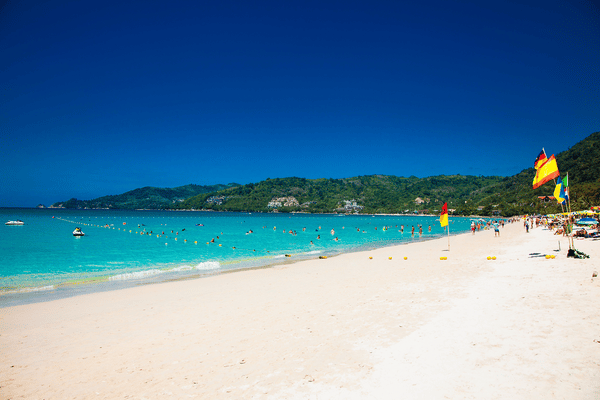
When to swim: in the high season (November–April) the water is calm, clear and about as swimmer-friendly as it gets. During the southwest monsoon (roughly May–October) the west-coast surf picks up and rip currents form — this is when the lifeguards fly red flags, and they mean it. A red flag is not a suggestion; swimmers get into trouble at Patong every green season by ignoring them. Swim between the flags, keep an eye on children, and save the big swims for the calm months or for sheltered east-coast waters.
What to actually do at Patong Beach
Beyond the towel-and-swim basics: walk the full length of the sand early in the morning when it is nearly empty; take the viewpoint road south toward Karon for the classic coastal photographs; try the watersports strip if jet-skis and parasailing are your thing (agree the price before you get on anything); and stay for sunset — Patong faces due west, so the beach itself is one of the island’s easiest sunset spots. Off the sand you have Jungceylon mall for air-conditioned refuge, Thai boxing at the Patong stadium, massage shops on every block, and a food scene that runs from ten-baht street skewers to serious seafood. If a full beach-club day is more your speed, several of the island’s best beach clubs are a short ride down the coast.
Bangla Road after dark
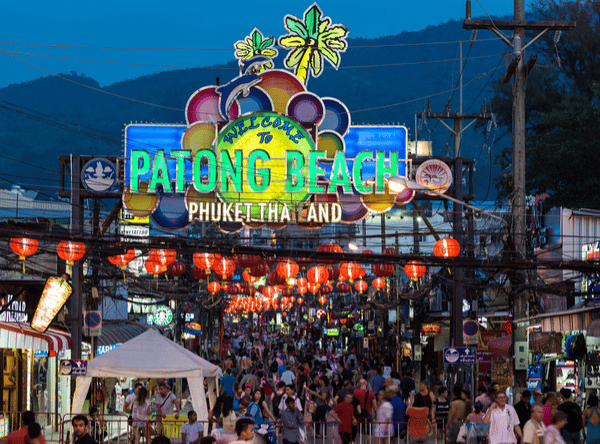
At sunset, Soi Bangla — the walking street connecting the beach road to Rat-U-Thit Road — switches on and becomes the most concentrated nightlife strip in Thailand outside Bangkok. Bars, clubs, live music, neon, touts, cabaret shows: it is loud, chaotic, and for one evening at least, absolutely worth seeing. Treat it like the spectacle it is: prices are posted for a reason, keep your wits about you, and know that the quieter cocktail bars and live-music spots sit one street back from the main drag. We cover the whole scene — including the calmer alternatives in Old Town and on the water — in our honest Phuket nightlife guide and the dedicated Bangla Road guide.

Where Patong fits in a Phuket trip
Here is the trade Patong offers: maximum convenience and energy, minimum serenity. Everything is walkable, everything is open late, and no other base on the island makes logistics easier. The compromise is crowds, traffic and noise — so the smart Patong itinerary uses the town as a base and spends its days elsewhere. The quieter west-coast sands are an easy songthaew or taxi ride away (our guide to Phuket’s best beaches ranks them), and the genuinely spectacular part of the region — the limestone islands of the Andaman — is a morning’s boat ride from the marina.
A word on who is writing this: Simba Sea Trips is run by an airline pilot who spent 23 years applying aviation safety standards, and that thinking now shapes our marine operations — small groups, daily weather calls by our local Thai captains, and no corners cut on equipment. It is also why we will happily tell you to respect the red flags at Patong: reading conditions honestly is the whole job.
Escape the crowds by boat
The single best cure for Patong fatigue is a 6am start on the water. Our Phi Phi Sunrise join-in tour (฿5,310 per person, all-inclusive, maximum 18 adults) collects you from your Patong hotel before dawn, catches the sunrise at sea on the crossing, and has you at the islands before the day-tripper fleet arrives — you are back in time for a shower before Bangla switches on. Prefer limestone karsts to beaches? The James Bond Island join-in tour (฿4,500 per person, all-inclusive) runs the sheltered waters of Phang Nga Bay. Both depart from Boat Lagoon Marina with hotel pickup included, so staying in Patong costs you nothing but an early alarm.
Getting there and practicalities
Patong sits on Phuket’s central west coast, roughly an hour by car from the airport, traffic depending, and 15–20 minutes over the hill from Phuket Town. Local songthaews shuttle to Phuket Town by day; taxis and ride-hailing apps cover everything else, and metered prices are worth insisting on. The beach is free, sunbeds are rented, and the kiosks behind the sand will keep you supplied all day — grab water and sunscreen before you settle in.